Understanding eye health
Before cataract surgery: tests and prep

Written by Dr. Tom Liba
What cataract is, how surgery is considered and what preoperative testing checks.

The key points
Briefly
Cataract is a clouding of the eye's natural lens, leading to blurred vision, glare, and difficulty with daily activities.
Surgery is considered when cataracts significantly impair vision and quality of life, not solely based on their severity.
Preoperative tests involve precise eye measurements to select the most suitable intraocular lens for implantation.
In detail
What is a Cataract?
A cataract is a common condition where the natural lens inside the eye becomes cloudy. The lens, located behind the iris and pupil, is responsible for focusing light rays onto the retina. When it becomes cloudy, light cannot pass through clearly, leading to gradual blurred vision, decreased visual acuity, increased glare (especially at night or in bright sunlight), and faded colors. Cataracts typically develop with age, but can also result from injuries, certain medical conditions, or the use of specific medications.
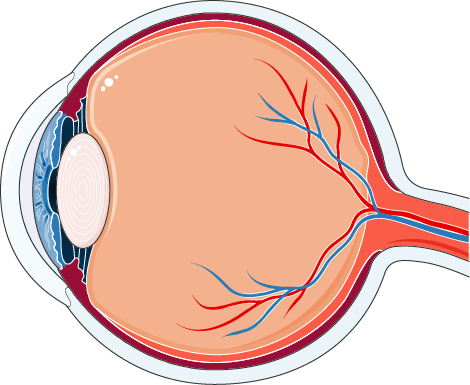
An eye cross section with a cloudy lens, showing where cataract occurs inside the eye.
Image: Servier Medical Art · Image source · CC BY 4.0 · Used without modification
When to Consider Cataract Surgery?
The decision to undergo cataract surgery is not solely based on the severity of the lens clouding, but primarily on how much it affects your quality of life and ability to perform daily activities. If cataracts cause difficulty with driving, reading, watching television, or recognizing faces, it may be time to consider surgery. Your doctor will evaluate your overall eye health, including the condition of your retina and optic nerve, and discuss your expectations and potential risks.
Preoperative Assessment and Consultation
Before surgery, a comprehensive eye examination will be performed by an ophthalmologist. This examination includes an assessment of visual acuity, intraocular pressure, and a thorough inspection of various eye structures, including the retina and optic nerve, to ensure there are no other eye conditions that could affect the surgical outcome. During the consultation, your doctor will explain the surgical procedure, available types of intraocular lenses, their advantages and disadvantages, as well as potential risks and complications.
Lens Measurement (Biometry)
One of the critical steps in preparing for surgery is lens measurement, known as biometry. This examination uses advanced technology to precisely measure the length of the eyeball and the curvature of the cornea. These data are essential for calculating the power of the intraocular lens that will replace the cloudy natural lens. Accurate selection of the intraocular lens is key to achieving optimal visual outcomes after surgery, potentially reducing dependence on glasses.
General Medical Preparation
In addition to eye examinations, a general medical evaluation by your family doctor or an anesthesiologist may be required, especially if you have underlying medical conditions or take regular medications. It is crucial to inform your surgeon and family doctor about all medications you are taking, including blood thinners, vitamins, and supplements. Do not stop any medication, including blood thinners, without explicit instructions from the responsible medical team. Eating and drinking instructions depend on the planned anesthesia and the clinic protocol. Some procedures under local anesthesia do not require fasting, while general anesthesia and some sedation plans do. Follow the instructions provided for your own operation and ask the team if they are unclear.
Important Preoperative Instructions
On the day of surgery, it is advisable to come with a companion. You should avoid makeup, jewelry, perfumes, or lotions. Continue taking your regular medications unless explicitly instructed otherwise. You may receive antibiotic eye drops to use for several days before surgery to prevent infections. It is important to understand all instructions and ask questions if anything is unclear. Adhering to these instructions contributes to the success of the surgery and a safe, swift recovery.
Postoperative Care and Follow Up
After surgery, you will receive detailed instructions regarding eye drop usage, activity restrictions, and warning signs. It is important to attend scheduled follow up appointments with your ophthalmologist to ensure proper healing and monitor the condition of your eye. If you experience severe pain, significant redness, sudden decrease in vision, or discharge from the eye, you should contact your treating physician or an emergency room immediately.
Tom Liba, M.D.
Contact
For questions and further information, you can contact me by email.
tomliba1996@gmail.com